A children’s book can be effectively dead within weeks of publication.
Not because no one saw it.
But because the first readers did.
They are written with care.
They are published with expectation.
And then… nothing happens.
Sales are slow from the start.
Early reviews are mixed or quietly critical.
Recommendations don’t spread.
Retailers, educators, and parents move on.
The book doesn’t get a second look — and it never gets the chance to recover.
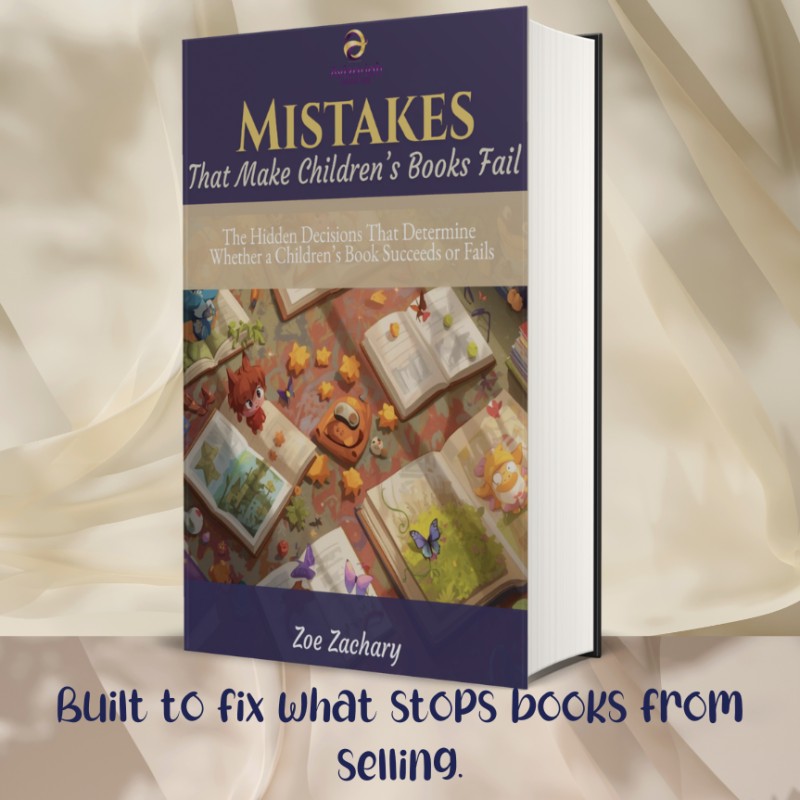
Mistakes That Make Children’s Books Fail explains why.
This book is not about talent, creativity, or passion. Many struggling children’s books are written by capable, thoughtful writers.
The problem is rarely effort.
The problem is alignment.
Children’s books succeed or fail based on a series of early, structural decisions — many of which feel reasonable while you’re writing them, and costly only after the book is already published.
These mistakes don’t announce themselves.
They compound quietly, shaping the reading experience in ways that undermine purchase, recommendation, and long-term traction.
This book identifies those patterns clearly.
Inside, you’ll learn why children’s books fail to gain momentum when they:
don’t commit to a specific age group
rely on good intentions instead of narrative drive
allow lessons to overwhelm story
use language that works against the reader
create characters children don’t attach to
copy what already exists without contributing anything distinct
choose formats that sabotage the story
treat visuals as decoration instead of structure
lower standards because “it’s for children”
assume promotion can fix foundational problems
This is not a how-to guide.
It does not teach writing techniques, voice, or style.
It does not promise success.
What it offers instead is clarity — the kind that lets you look at a manuscript and tell, with accuracy, whether it stands a real chance of converting attention into purchase, and purchase into recommendation.
Throughout the book, failure is defined as a market outcome, not a personal judgment. A book can be published and still fail. A book can be well-intentioned and still be passed over. And once early signals turn weak, visibility doesn’t save the work — it accelerates the decision to move on.
If you’re planning another release, skipping this correction stage means
discovering the problem after publication — when the cost is locked in and the opportunity to sell has already passed.
If you’ve written a children’s book that struggled to sell, this book will help you understand why.
If you’re planning to write one, it will help you avoid problems before they harden into patterns.
If you’ve written several, it may reveal recurring decisions that have quietly limited their reach.
Children’s books don’t fail because the market is cruel.
They fail because the book itself didn’t survive early reader scrutiny — and early purchases turned into weak reviews instead of recommendations.
Fix the book first.
Then everything else finally has something solid to work with.